
If your business operates across specific audiences or locations, your media should be able to work just as precisely. That’s the essence of geo-targeting: focusing your budget where it can make the most impact. At MEERKATworks our “burrows” in Brighton and Edinburgh mean we have paws on the ground in two very different local and regional markets, while our planning and buying expertise stretches right across the UK and internationally.

What are geo-targeted campaigns?
Geo-targeting is the process of selecting where your advertising appears using geographic signals such as postcodes, cities, counties and regions. Instead of blanketing an entire country, you concentrate activity where it will be most relevant and effective. This applies not only to digital impressions, but also to traditional channels such as linear TV, static out-of-home, print and radio. The approach underpins successful geo-targeted campaigns across categories from retail and hospitality, to education, charity, travel and food and drink.
Why does it matter? Because context is everything. Tourists in Brighton respond to different visual cues than commuters in Edinburgh, and a rural audience has different media habits than an inner-city audience. The available options for advertising will also vary – think of the billboards lining a main road compared to the limited placements in a suburban neighbourhood. Done well, geo-targeted advertising respects local nuance, cuts waste and increases response rates. Done brilliantly, it creates a feeling of “this brand is for me”.

Why geo-targeting works: Benefits for advertisers and audiences
Geo-targeting delivers a double win: sharper efficiency for businesses and greater relevance for people. For advertisers, you avoid wasted reach and connect media to region or catchment objectives. For audiences, messages feel instantly more useful, which boosts click-through, footfall and conversion.
From a media planning perspective, this is why geo-targeted campaigns shine:
Budget focus. Allocate spend where it can truly make an impact. In some regions, your budget might be sufficient to achieve meaningful reach and frequency across OOH or premium digital channels, while in others it may be better to maintain presence with lighter activity or careful testing. The key is not to spread investment too thin, but to direct it where it will deliver measurable results.
Attribution clarity. With defined geographies, you can tie activity to region-level KPIs, such as enquiries, bookings, sign-ups, donations or qualified leads and see cause and effect.
For audiences, geo-targeted advertising cuts through the noise. It answers practical questions first: “Is this near me? Is it available today? Can they deliver to my postcode?” Relevance earns attention and attention drives action.
Traditional media and geo-targeting: How print, radio and outdoor stay precise
Traditional media, including print and local radio, offer sophisticated geographic controls that rival digital precision.
Regional and local press
Local and regional press sell by title, edition and geography, so you can match coverage precisely to your catchments. For organisations with roots in the community, regional press remains a trusted channel that signals you’re active locally.
Radio and digital audio
Commercial radio planning in the UK is built around RAJAR-defined TSAs (Total Survey Areas). You can buy a single station in one city, a small cluster across neighbouring counties or a wider regional network and pace the weight by week or daypart (e.g. breakfast, drivetime). Creative localisation is simple: add station-specific tags, reference local places or teams, use regional phone numbers and tweak the call to action (for example, “speak to our Edinburgh team today”). For time-sensitive activity such as event launches, university intakes, charity appeals, seasonal services, radio’s immediacy and cost-effective reach make it hard to beat for geo-targeted campaigns.
Digital audio offers an even more targeted approach, where campaigns can be planned to reach the target audience down to postcode level. Dynamic creative can also be served to reach specific audiences in specific areas, making the messages relevant.
Out-of-Home and DOOH
OOH is inherently geographic and pinpointed to defined locations. Classic 6-sheets, bus rears, roadside 48s, rail and shopping centre formats map directly to real streets and journeys. DOOH adds screen-level control: schedule by hour and day, swap creative by location, context or postcode and serve different messages across a city. You can ring-fence priority postcodes, venues or campuses with proximity panels, weight commuter corridors and arterial routes or take over a town or city centre during launch week.
Cinema works well alongside this as it can be bought down to the individual venue. Cinema advertising lets you target leisure catchments with long dwell time and premium impact. Campaigns can be planned by postcode and synced with release calendars (blockbusters, awards season, school holidays), adding a high-attention layer that reinforces OOH presence. Both channels drive visibility in the physical world.
In many categories, OOH creates a visibility halo that lifts performance across other channels, particularly paid search and social within geo-targeted campaigns.
Regional/ addressable TV
For TV, “local” typically means regional airtime (e.g. ITV macro-regions or STV in Scotland) and increasingly addressable TV (e.g. Sky AdSmart) that serves spots to households in selected postcodes or local authority areas. This gives you broadcast-quality storytelling inside bounded geographies, minimising budget waste. At high-attention moments, cinema and regional/ addressable TV deliver scalable local reach that fits neatly into geo-targeted campaigns.
Traditional channels don’t just support geo-targeted advertising – they are local by design. At MEERKATworks, we know the key is carefully interlinking and combining them into a unified plan.
Streaming and Broadcast Video on Demand (BVoD) campaigns offer advertisers the opportunity to target audiences down to postcode level. This includes campaigns on the VoD platforms of broadcasters such as Sky, ITV and Channel 4, as well as streaming services reached through CTV campaigns. Pause ads can also be planned down to postcode level, to best reach the target coverage area.

Digital media and geo-targeting: Programmatic and data-driven precision
Digital platforms offer fine-grained location controls that pair well with intent and audience signals.
Programmatic display and video
Programmatic advertising lets you buy display, video and Connected TV (CTV) inventory with geos as tight as postcode sectors, layered with audience segmentation such as demographics, interests, in-market behaviour and contextual cues. For instance, we can serve video ads to households in EH postcodes on evening CTV slots, while simultaneously running mobile display to people passing within 800 metres of a venue. Frequency and pacing sync across formats and dynamic creative variants swap by area.
DOOH via programmatic
Buying DOOH programmatically means we can trigger screen plays in specific locations at specific times, adjust delivery to weather or events and unify reporting with online channels. A rainy afternoon in Glasgow? Serve the sunny beach tourism campaign creative. Saturday footfall spikes in Brighton? Hold the budget for peak hours. Experience has shown the MEERKATs that buying digital outdoor advertising programmatically can be the perfect bridge between online agility and offline impact.
Blending traditional and digital: the MEERKATworks way
We plan by carefully scanning and meticulously mapping your real operating environment – coverage areas, service capacity, enquiry density, growth zones and competitor hotspots. We then build an integrated cross-channel plan whose geography mirrors that map.
In practice, this means:
Using OOH to build street-level visibility in priority catchments, dayparted to when we know your audience is out and about.
Running local radio or digital audio bursts for rapid coverage at key moments (launches, seasonal peaks), with city-specific scripts and tags.
Activating programmatic on geographies that match the OOH footprint, swapping creative by town/city and time of day. This also allows for AB creative testing in different regions.
Geo-targeting isn’t just about where ads are placed outdoors – it can extend right into the heart of the home. A geotargeted BVoD pause ad campaign (planned to postcode) can recreate the effect of seeing a billboard on the street but this time on your TV in the comfort of your living room. There is also the potential to explore more advanced approaches, such as syncing DOOH and CTV with mobile for sequential coverage. For example, a screen seen in town, followed by a reminder on mobile near key venues or postcode clusters, and then completing the action via search at home. While still in development, ideas like this enable brands to consider how connected touchpoints can work successfully together.
Cross-channel knowledge and discipline are central to how the MEERKAT geo-targeted campaigns deliver such effective, measurable outcomes.

Geo-targeted advertising campaign examples
Royal Trinity Hospice
Royal Trinity Hospice – a hyperlocal OOH burst across South London. The MEERKAT team concentrated 4-sheets and lift and escalator panels around Balham, Clapham South, Wandsworth and Clapham Common. We mapped placements to Trinity’s local catchments so the message met people on everyday journeys, providing an excellent example of geo-targeted advertising with precise neighbourhood focus.
The Parks Trust
The Parks Trust – Milton Keynes-focused TV and streaming – is a clear example of geo-targeted advertising delivered via TV and VOD. The MEERKATs planned and bought regional/streaming spots on ITVX, Channel 4 Streaming and Sky specifically for the Milton Keynes area, reaching the community The Parks Trust serves.
Lightning Fibre
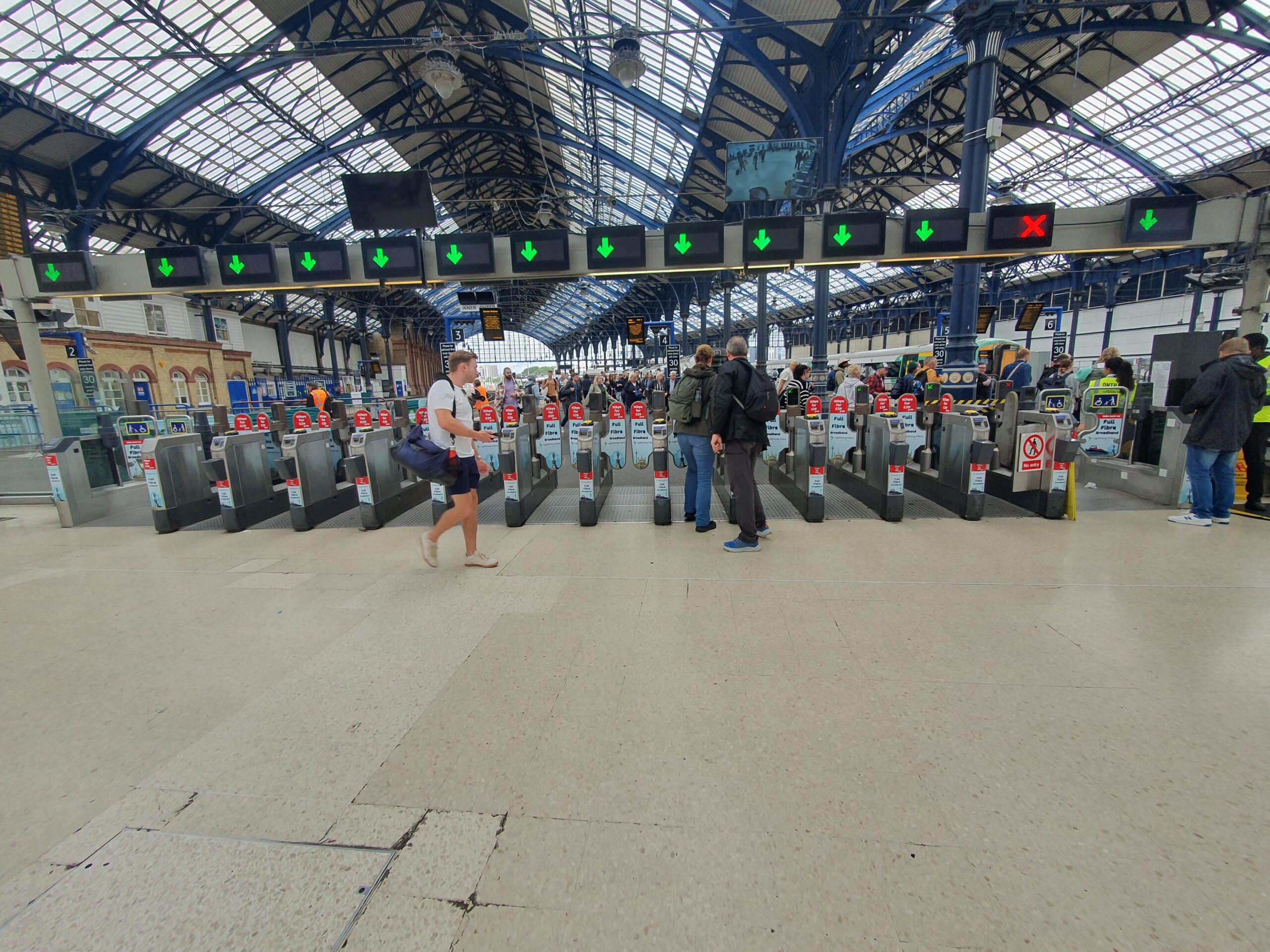
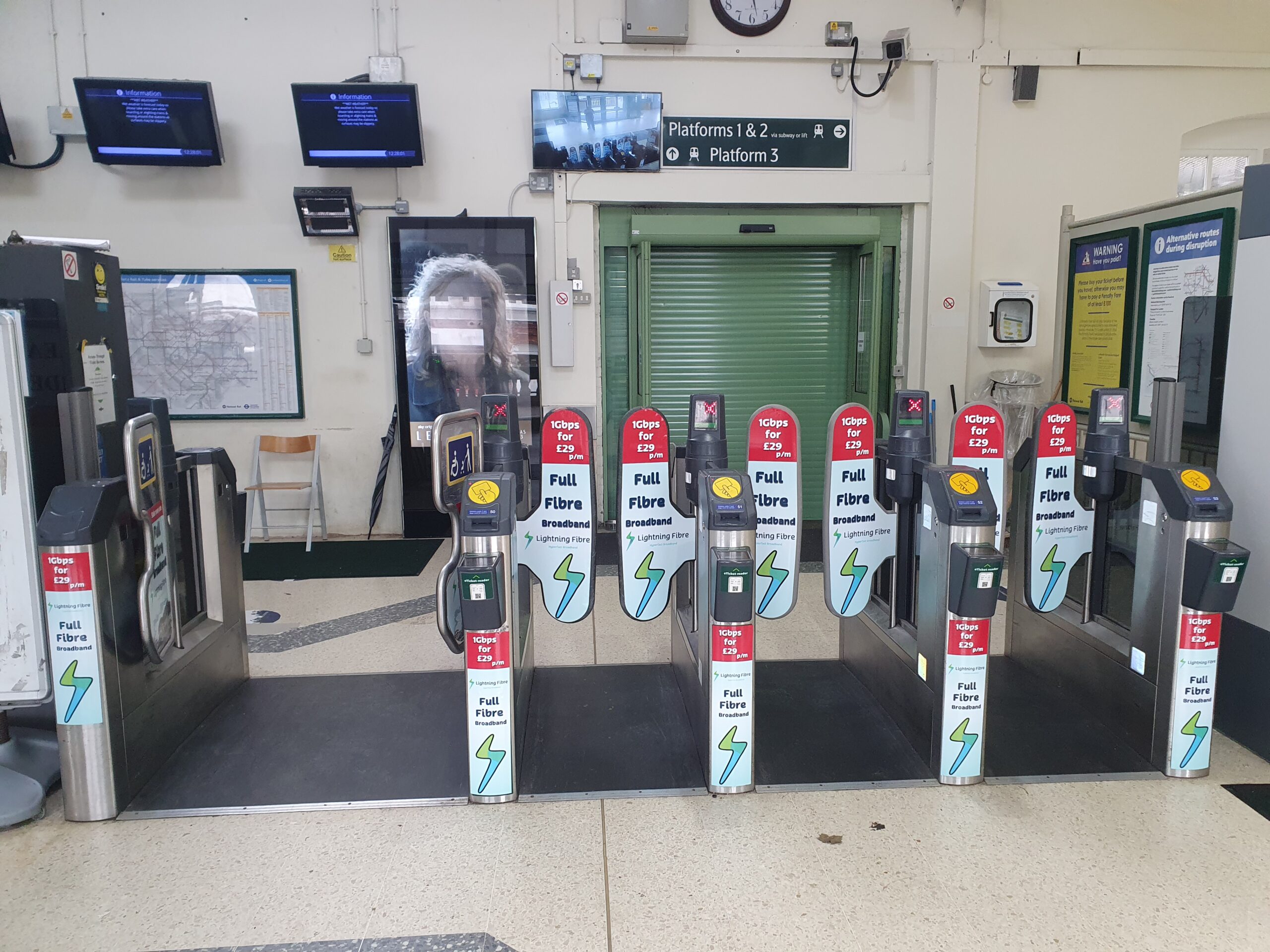
Lightning Fibre – South Coast station OOH in live service areas. The MEERKATs focused activity with precision, where the network operates in Brighton, Worthing and Eastbourne. We bought AdGate panels at major rail stations, as well as the Transvision screen at Brighton station, to meet commuters on daily journeys.
Best practices and tips: How to run geo-targeted campaigns that convert
Start with your operational map, not the media plan. Plot stores, delivery limits, serviceable postcodes, franchise territories and competitive hotspots. Build tiers: Tier 1 (core catchment), Tier 2 (commuter/leisure spill), Tier 3 (brand-building reach). Your plan should mirror these operational rings.
Match the creative to the geography. Put local signifiers into headlines, visuals and audio. Use local landmarks, local photography and local testimonials.
Sync channels by place and time. If DOOH is running in Edinburgh city centre, schedule social and mobile in the city to reinforce with search. Sequence messages: awareness on the street, consideration on mobile, conversion at home.
Use exclusions as carefully as inclusions. Remove areas you can’t serve (to protect budgets) and test borders. If your delivery edge is EH10, don’t pay for EH11 unless there’s an upsell path.
Plan for measurement. Agree KPIs by geography: footfall, calls, bookings, redemptions, sales uplift. Use unique codes by area, location extensions and shop-visit estimation where appropriate. Most of all, benchmark – so you know what success looks like before you start.
Keep testing. Swap creatives by area, test offer versus brand copy and trial new DOOH screens. Small, well-designed tests inside a city often teach you more than splitting your budget across twenty.
Geo-targeted campaigns provide advertisers the opportunity to make budgets work harder in a defined area. However, it is worth noting that scale will always be the decider at the end of the day. Too small an area can prohibit the delivery of a meaningful campaign with impact.
Why work with MEERKATworks
We’re an independent media planning and buying agency founded in 2005. The MEERKATs are an agile, alert and creative team with experience right across the media landscape. Our Brighton and Edinburgh “burrows” keep us close to regional nuance, while our client roster takes us across the UK and overseas. We’re seasoned in geo-targeted campaigns, and we’re experts in combining traditional and digital, so ensuring every channel amplifies the next.
What clients tell us they value:
Geography-first planning. We build plans from your commercial map up, not from a generic channel template down.
Buying and planning without bias. As an independent agency, we buy what works for your territory – not what works for the media owner. That means OOH, radio, print, digital and programmatic and TV, all planned to work together for maximum impact.
A partner mindset. We’re agile, transparent and quick on our paws. When the weather turns, a competitor launches or stock shifts, we adjust the plan – fast.
Brands grow where they’re seen and heard, understood and served, which is why place matters. Whether you’re opening a clinic in Glasgow, growing a business network across the Midlands or launching a new product in Brighton, geo-targeted campaigns give you the control to match media to commercial reality.
If you’re ready to try geo-targeted advertising, let’s chat. MEERKATworks plans and buys geo-targeted advertising that respects local subtleties and nuance, reduces waste and accelerates growth. Get in touch to tell us where you’d like to make your next mark – we’ll use our 20 years of expertise to create a bespoke plan, with MEERKAT punch, that’s precise to the postcode.