
Your guide to hospice advertising and how UK hospices can reach local communities with trust.
For many people, the name of their local hospice only becomes familiar at the point they, or someone they love, needs its care. Until then, it tends to sit quietly in the background of the community: a shop on the high street, a fundraising poster in a café, a charity collection at a local event or a building they have passed without really thinking about what happens inside.
This quiet presence can create a challenge for garnering wider support, as people may not understand the full breadth of hospice care until life brings them close to it. They may not know that hospice teams support people at home as well as in hospice buildings, that they care for families as well as patients or that much of their work depends on donations, shops, events, legacies and regular local support.
This is where hospice advertising has an important role to play – not to frighten people into paying attention and not to turn a sensitive subject into a hard sell, but to build familiarity before the moment of need. Good hospice advertising helps local people understand what the hospice does and how they can support it in ways that feel natural, practical and connected to their community.

A hospice campaign may need to fill places at a fundraising event, promote a new shop, increase donations, encourage regular giving, recruit volunteers or start a careful conversation about legacy giving. Each of these goals needs visibility, but it also needs good judgement and excellent media planning experience. Good media planning helps make those decisions clearer; it looks at where the hospice’s supporters are, where future supporters could be reached, how people move through the local area, which media channels carry the right level of trust and how a limited budget can be used without wasting spend. MEERKATworks has planned and bought media for a range of hospice and charity campaigns, from localised out-of-home (OOH) activity and event promotion to ITVX Pause Ads, programmatic campaigns and retail awareness. This experience has shown us that hospice marketing works best when it is both practical and emotionally intelligent: clear enough to drive action, but careful enough to respect the subject, the audience and the community behind it.
What is hospice advertising?
Hospice advertising is the use of paid media to promote a hospice’s services, fundraising activities, retail locations, events, campaigns, volunteering opportunities or ways to give. It can include OOH advertising, local press, radio, digital and programmatic advertising, connected TV and more. Hospice advertising often has a very specific local footprint, most hospices serve a defined catchment area. Their audiences are rooted in nearby towns, villages, boroughs or counties. People may already know the hospice name, but they may not fully understand what it does, who it helps, how it is funded or how they can support it. This means that hospice media planning is especially important, as a campaign needs to reach the right households, families, donors, shop visitors, event participants, volunteers and potential supporters within the hospice’s local community.
The best hospice campaigns start close to home
Hospice marketing is different from standard commercial advertising because the subject matter is inherently human. Hospices support people and families during some of the hardest moments of their lives. The language, creative, media placement and timing all need to respect this focus.
A campaign that would work for a retail brand, event company or leisure attraction may feel wrong for a hospice if it is too urgent, too loud or too transactional. The aim is not to shock people into action; it is to build recognition, understanding and trust over time. Local trust is particularly important. People may have personal connections to a hospice through family care, bereavement support, fundraising, volunteering, hospice shops or community events. Good hospice advertising should aim to strengthen that connection. This is where media planning comes into its own – a strong hospice campaign considers geography carefully. It asks where existing supporters live, where new audiences could be reached, which stations, routes, retail areas, digital audiences and local publications matter and how each channel can support the campaign objective.

The many jobs of a hospice campaign
The starting point for any hospice advertising campaign should be the objective. ‘Raise awareness’ is a common brief, but it is often too broad on its own. A hospice campaign works better when the objective is clearly defined from the beginning.
Increasing donations
Donation campaigns need trust and a strong reason to act. The media plan should help the hospice reach people who are likely to feel a connection to the local cause, while the creative should make it clear how donations support care in the community. Digital advertising, search and programmatic can all play a role here, especially when paired with retargeting to remind people who have already visited the hospice website or donation page. Local press, radio and OOH can add broader visibility and credibility.
Promoting fundraising events
Hospice events often need a concentrated local push. This might include family fun days, sponsored walks, runs, remembrance events, fairs, open gardens or seasonal fundraising campaigns. OOH can work especially well when event attendance depends on local awareness. Posters near parks, stations, leisure locations, high streets or community routes can put the event in front of people in the right catchment. Paid social can support sign-ups by targeting local families, supporters and interest groups. Local press and radio can add community warmth.
The MEERKATs planned and bought an OOH campaign for St Raphael’s Hospice’s ‘Super Hero Family Fun Day’, which is a good example of the effective use of geo-targeted media formats around a key local area to support event awareness and participation.
Driving hospice shop or superstore footfall
Hospice retail campaigns are slightly different because they need to reach shoppers, donors and local residents in everyday moments. The message may be about visiting a new shop, donating pre-loved items, discovering sustainable fashion or supporting local hospice care through retail. For St Catherine’s Hospice, MEERKATworks planned and bought a geo-targeted campaign to promote the charity’s new superstore. The media mix included roadside 6 sheets, rail 4 sheets and petrol pump nozzles, selected to reach people in and around Crawley during everyday journeys. This kind of location-based planning is particularly useful for hospice retail because the campaign needs to drive awareness and action around a specific place.
Building awareness of hospice services
Many people do not fully understand what hospice care involves until they or someone close to them needs support. Service awareness campaigns need careful wording and a calm, informative tone. They may need to explain that hospice care can include support at home, emotional and practical help for families or services that reach beyond an inpatient unit. For this type of campaign, trust-building channels can be valuable; local press, radio, OOH, digital display and search can all help a hospice answer questions and signpost people to further information.
Supporting legacy giving
Legacy giving campaigns are not usually quick-response campaigns, they are about keeping the hospice front of mind when people are thinking about the causes they want to remember in their will. Connected TV campaigns can be particularly powerful for this type of message because they reach people in a more reflective, domestic setting. For example, MEERKATworks planned and bought a geo-targeted ITVX Pause Ad campaign for Royal Trinity Hospice, encouraging the local community to consider leaving a gift in their will to support ongoing care.
Recruiting volunteers
Volunteers are central to many hospices, particularly across retail, events, fundraising and community support. Volunteer recruitment campaigns often benefit from a local, values-led message that explains the role, the time commitment and the difference people can make.
OOH and community-focused digital campaigns can work well, especially when targeting people close to specific shops, event sites or hospice locations.

How media planning improves hospice campaign results
Hospice teams are often pulled in several directions at once, from fundraising appeals and shop promotions to service awareness and legacy campaigns. Good media planning helps turn that pressure into a clear, focused plan, so the budget is spent where it has the best chance of making a difference.
The planning process should consider:
- the campaign objective
- the priority audience
- the hospice catchment area
- the required reach and frequency
- seasonal timing
- creative format
- budget allocation
- measurement
- how the campaign supports wider fundraising or communications activity
For hospices, this is particularly important because budgets are often carefully scrutinised by senior teams and trustees, so every pound needs a purpose. A media plan also helps avoid the common trap of chasing visibility without thinking about relevance. For a hospice, reaching fewer people in the right postcodes may be more valuable than reaching a much larger audience with no real connection to the area.
Hospice advertising campaign examples
MEERKATworks has supported a range of hospice advertising campaigns across OOH and programmatic.
For St Catherine’s Hospice, the campaign objective was to promote the new Crawley superstore. The MEERKAT team planned and bought a geo-targeted outdoor campaign using roadside 6 sheets, rail 4 sheets and petrol pump nozzles. Each format was selected to build awareness around Crawley and reach people through routine journeys and local touchpoints.
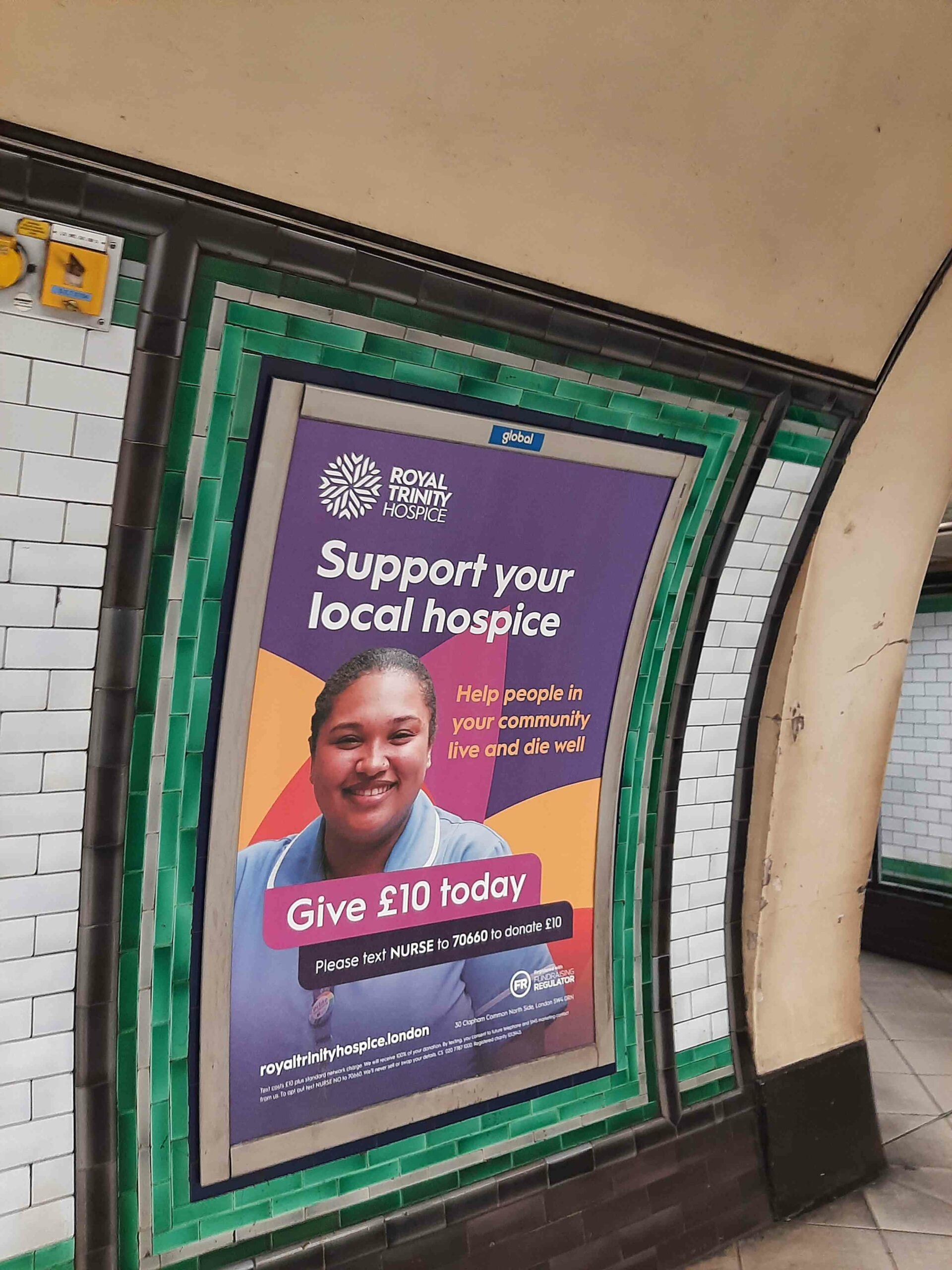
For Royal Trinity Hospice, the MEERKATs planned a localised OOH campaign using strategically placed lift and escalator panels and 4 sheets at key stations, alongside static and digital formats close to hospice shops. This helped connect the hospice’s message with people already moving through relevant local environments. MEERKATworks also planned and bought a geo-targeted ITVX Pause Ad campaign for Royal Trinity Hospice, encouraging local audiences to consider leaving a gift in their will. This approach suited the reflective nature of a legacy message, using a trusted viewing environment and postcode-level planning.
For St Raphael’s Hospice, the MEERKATs combined programmatic advertising with ITV Pause Ads to raise awareness, drive engagement and encourage support. The programmatic activity sent traffic to the hospice website, while the ITV activity helped the campaign reach households across the hospice’s catchment area. St Raphael’s Hospice also worked with MEERKATworks on an OOH campaign for its Super Hero Family Fun Day, using geo-targeted formats across rail, roadside, bus and leisure environments around the key coverage area.
Hospices do extraordinary work, but too often, people only understand the value of their local hospice when they or someone they love needs care. Advertising can help change that. The right campaign can make your hospice more visible, better understood and easier to support. It can bring more people to your events, shops and fundraising campaigns. It can help start sensitive conversations around regular giving and legacies, and it can also remind your local community that hospice care is not distant or abstract but taking place close to home, every day.
The MEERKATs work alongside hospices to plan and buy media with care and expert insight. We can help you choose the right channels and make your budget work harder. If you’re planning a hospice advertising campaign, get in touch with the MEERKATworks team today to talk about how we can help.