
Retail advertising that reaches people where they shop.
Retail advertising puts your brand in front of people when they are already out shopping, browsing or moving through commercial spaces. Instead of relying on someone choosing to engage with an ad online, retail advertising appears in places where attention is already available and purchase mindset is strong.
At MEERKATworks we understand the power of retail advertising and how to plan it effectively. Retail advertising covers a wide range of environments and formats. It can mean in-store advertising in supermarkets, large-format screens in shopping centres, digital billboard ads near retail parks or tactical placements along busy high streets. It can support brand-building, local awareness, store launches, seasonal bursts and catchment-led campaigns. In short, it allows brands to strategically ‘show up’ where people are already spending time and money.
Why retail advertising still works
Retail advertising works because it reaches people in high-footfall environments where buying decisions and browsing behaviour often happen at the same time. In a shopping centre, supermarket or high street locations, your message becomes part of the customer journey rather than an interruption to it. This is especially valuable for brands that want to influence awareness close to the point of purchase or reinforce a message across multiple touchpoints in a single visit.
It also gives advertisers physical presence; seeing a campaign when you are out and about can make a brand feel established, visible and credible. For challenger brands, that can be powerful and for established brands, it can help maintain dominance in busy retail environments. For local businesses, it can build familiarity within a defined catchment without wasting budget on people outside the right area.
The key retail advertising environments
Retail advertising is not one single format or location. The MEERKAT team knows from experience that different environments perform different jobs, and the best campaigns start by matching the environment to the audience behaviour you want to influence.
Shopping centre advertising
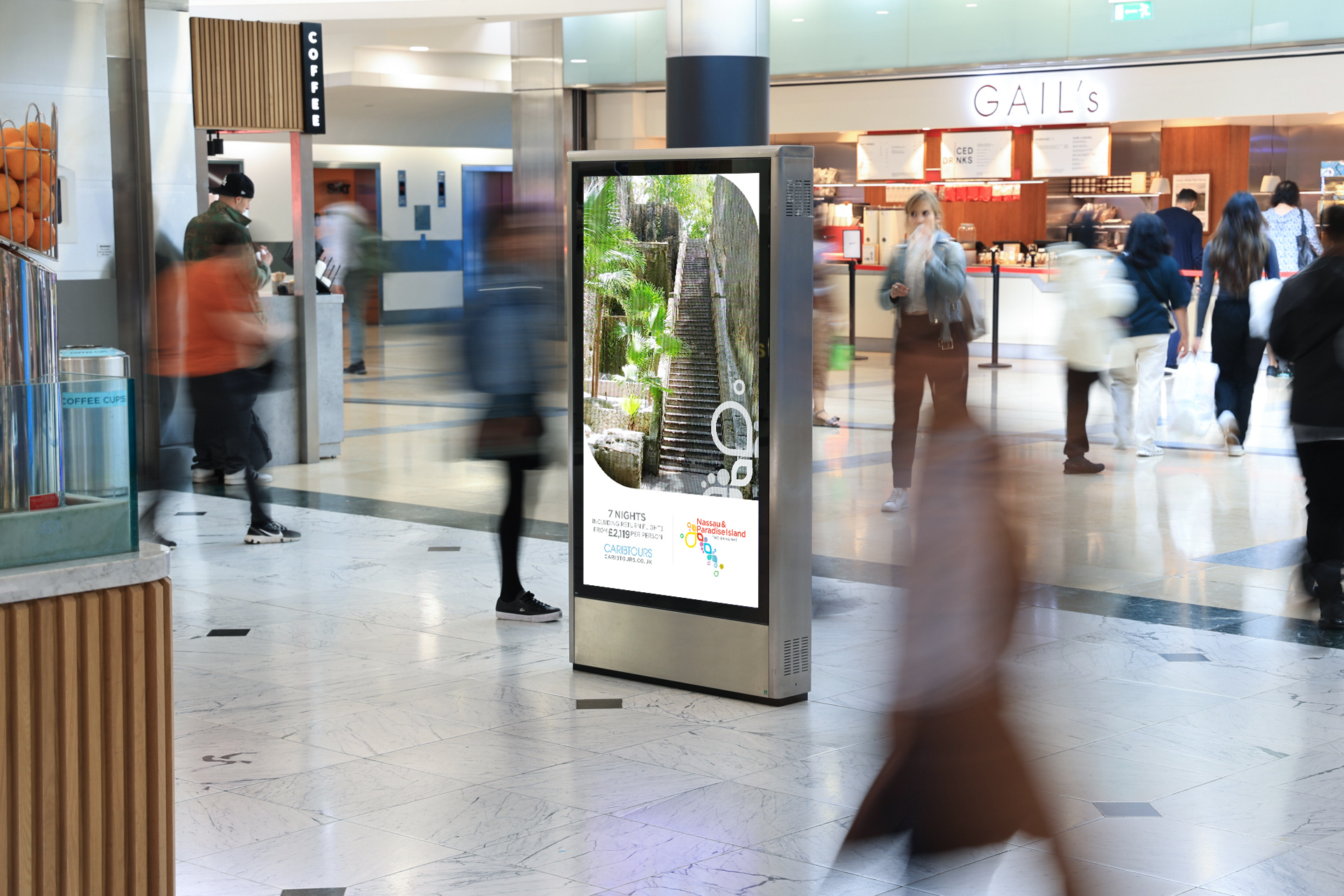
Shopping centre advertising offers strong dwell time, heavy footfall and the chance to build frequency through multiple placements in one destination. Shoppers tend to move more slowly in these environments than on the roadside and they often spend longer there, making them ideal for both static and digital formats. Shopping centre screens are especially effective because they can carry moving creative, rotate messages and adapt to different times of day or phases of a campaign. Lift and escalator ads also work well here because they catch people during transition points when attention is more focused.
This environment becomes even more valuable during seasonal retail campaigns. Christmas, Black Friday, summer sales and back-to-school periods all bring increased shopper activity and stronger intent. A well-timed campaign in a shopping centre can help brands capitalise on that uplift and stay visible during the moments that matter most.
High street advertising
High street advertising reaches people in busy urban areas where shopping, work, hospitality and leisure overlap. These spaces can be fast-moving, but they benefit from constant circulation and repeat exposure. A message placed on a premium high street can be seen by commuters, residents, visitors and shoppers throughout the day, making it an effective environment for both broad awareness and local relevance
Supermarket advertising
Supermarket advertising is one of the closest forms of media to the point of purchase. It reaches people while they are actively shopping and often seeing the same message repeatedly throughout a store visit. This makes it especially effective for in-store advertising formats such as shopping trolley advertising, checkout panels, aisle placements, digital screens and bathroom panels advertising. It can work well for FMCG, family brands, local services, household names and businesses that want to stay front of mind with everyday consumers. The key strength here is repetition within a highly routine environment.
Retail park advertising
Retail park advertising is useful for brands that want to reach shoppers on larger-format retail trips, often in car-led destinations with defined catchments. These environments are well-suited to categories such as home, furniture, DIY, automotive, electricals and leisure, but they can also work for restaurants and nearby services. Because retail parks tend to serve clear geographic areas, they are especially effective when used as part of local geo-targeted retail ads.
The main types of retail advertising
At MEERKATworks we take a holistic approach to media planning & buying, and we know from experience that strong retail advertising campaigns often combine formats rather than relying on a single placement.
Digital billboard ads
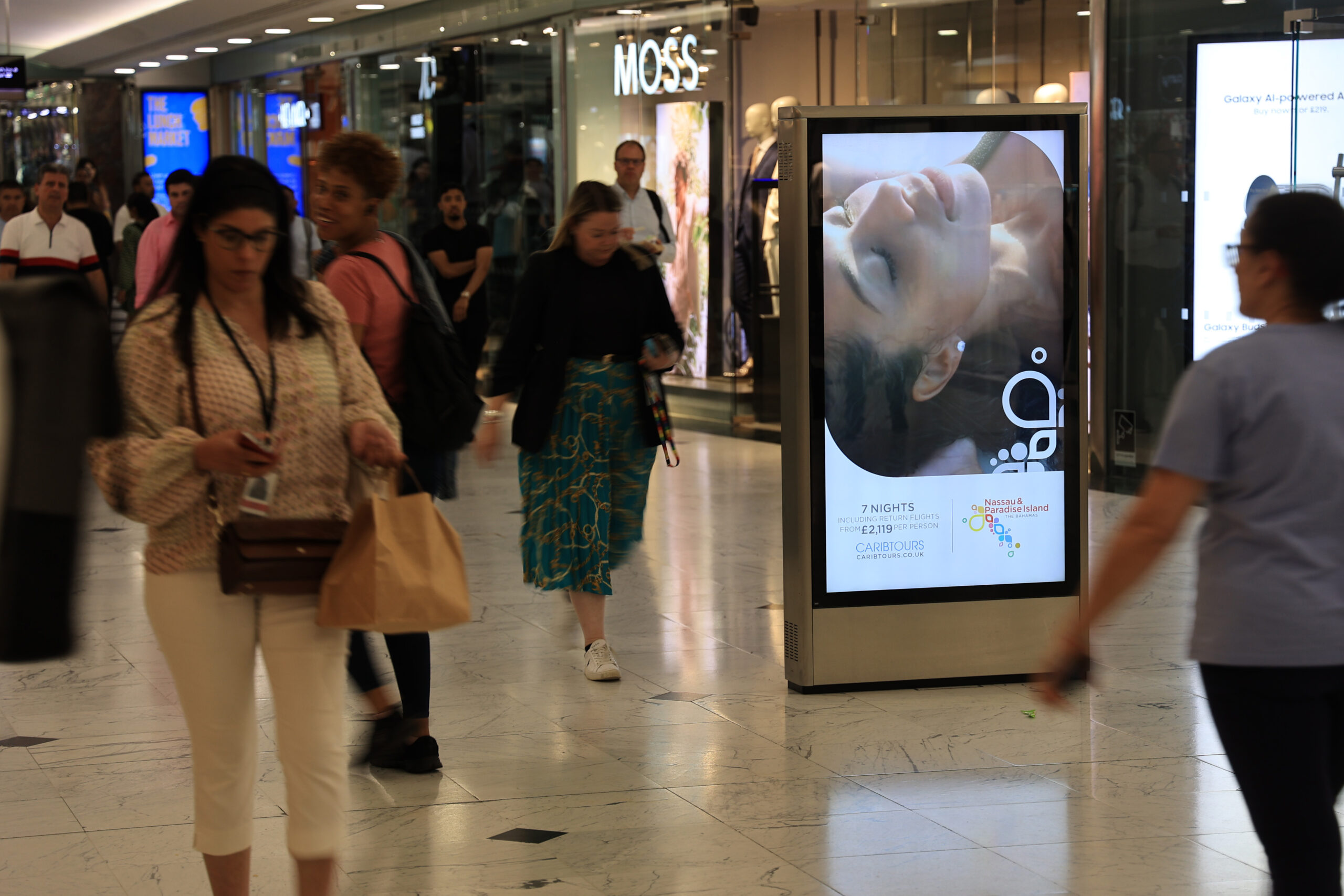
Digital billboard ads deliver impact, flexibility and strong visibility. In retail environments, they can be used to support launches, promotions, seasonal messaging or broader brand-building activity. As creative can be updated quickly, they are useful for advertisers who want to change messages by daypart, campaign phase or location. This makes them especially relevant for retail brands with tactical offers or time-sensitive messaging.
Shopping centre screens
Shopping centre screens are among the most effective tools for reaching shoppers while they are already immersed in a retail setting. Positioned near entrances, walkways or food courts, they bring movement and visual cut-through to busy spaces. They are particularly useful for seasonal retail campaigns, where fresh creative and short-term messaging can keep pace with trading periods and promotional peaks.
Lift and escalator ads
Lift and escalator ads work because they appear in moments where people slow down or are naturally focused ahead. In shopping centres, these placements can be surprisingly effective because they turn transitional spaces into media opportunities. They may not be the largest format in the plan, but they can add valuable frequency and help reinforce a campaign seen elsewhere in the same venue.
Shopping trolley advertising
Shopping trolley advertising is a simple but effective form of in-store advertising. The strength is in duration. Rather than appearing for a passing moment, the message stays with the shopper throughout the trip. This makes it useful for concise branding, local business promotion, service-based messaging and campaigns where repetition helps drive recall.
Bathroom panels advertising
Bathroom panels advertising reaches people in a quieter, more captive environment, away from the busy retail floor. It is usually best used for simple messaging with a strong brand line or call to action. As part of a wider retail campaign, it can add another layer of frequency.
How to use retail advertising effectively
Retail advertising works best when it starts with a clear objective. Some brands want to build awareness in a specific location. Others want to support a store opening, drive footfall, promote a limited-time offer or maintain visibility during a crucial trading period. Once the objective is clear, it becomes easier to choose the right environment and format.
The strongest campaigns usually follow a straightforward planning logic:
- Start with the catchment, not the format.
- Choose environments that reflect how the audience actually shops and moves.
- Keep creative bold, quick to absorb and easy to remember.
- Build repetition through multiple placements or complementary formats.
- Align activity with peak retail periods, launches or seasonal demand.
- Measure impact using the indicators that matter most, such as footfall, response, search uplift or sales movement.
This is where seasonal retail campaigns can be especially powerful. Retail audiences do not behave the same way all year round. Christmas and Black Friday bring urgency and gifting behaviour. January may suit home, health and reset messaging. Spring and summer can work well for leisure, lifestyle, tourism and outdoor-led campaigns. A good retail advertising plan reflects those shifts rather than treating every month the same.
Local geo-targeted retail ads
Not every retail campaign needs nationwide scale. In fact, many work better when they focus on specific places. Local geo-targeted retail ads allow brands to put budget behind the towns, postcodes, retail zones and shopping destinations that matter most to them. That means less waste and greater relevance.
Retail advertising and your media plan
Retail advertising remains one of the most effective ways to reach people, in places where shopping and attention naturally come together. For brands looking to strengthen visibility, launch seasonal retail campaigns or run local geo-targeted retail ads, retail media environments continue to offer plenty of value. The opportunity is not simply to be seen near shops; it is to show up in the right place, with the right format and the right message, while people are already in a retail mindset. That is exactly the kind of planning challenge where MEERKATworks performs brilliantly.
Planning a retail campaign and want to reach shoppers? Speak to the media experts about building a smarter retail advertising strategy across shopping centres, high streets, retail parks and in-store environments. Get in touch with the team today to give your campaign real MEERKAT punch.